Blog

Is Stainless Steel Decorative Panels Good for Commercial Kitchens?

2026-05-21 · 12 min read

For professional foodservice operators, stainless steel decorative panels are the single best investment for walls, backsplashes, and high-traffic surfaces. This guide breaks down hygiene compliance, fire safety, durability, cleaning efficiency, and aesthetics — with data-driven cost analysis for procurement managers.

stainless steel decorative panels commercial kitchenscommercial kitchen wall cladding304 stainless steel kitchencommercial kitchen hygiene standardsstainless steel backsplashanti-fingerprint stainless steelcommercial kitchen fire safetystainless steel wall panel installationcommercial kitchen material selectionstainless steel panel cost analysis

The Short Answer

Short answer: Yes — and for most professional foodservice operators, it is the single best investment you can make for walls, backsplashes, and high-traffic surfaces. When specified correctly (typically 304-grade with brushed or anti-fingerprint finish), they outlast tile, FRP panels, and painted drywall by a significant margin while reducing daily cleaning labor.

Why Commercial Kitchens Are Uniquely Demanding

Commercial kitchens are among the most punishing interior environments. Walls and surfaces must simultaneously withstand:

  • Thermal shock: Temperatures swinging from near-freezing (walk-in access areas) to 90°C+ near grills and fryers
  • Grease saturation: Airborne oil particles that coat every vertical surface within months
  • Chemical exposure: Daily cleaning with degreasers, sanitizers, and occasionally bleach-based solutions
  • Physical impact: Dents and scratches from carts, pans, and constant foot traffic
  • Microbial regulation: Health department standards that mandate non-porous, easily sanitized surfaces

Traditional materials fail predictably in this environment. Painted drywall absorbs moisture and grease, becoming a breeding ground for bacteria behind the surface. Ceramic tile offers decent moisture resistance, but grout lines are notoriously difficult to sanitize and inevitably crack under thermal cycling. FRP (Fiberglass Reinforced Plastic) panels are common in budget installations, but they yellow within 2–3 years, warp near heat sources, and lack the structural integrity for high-impact zones.

Stainless steel decorative panels address every one of these failure modes — which is why they are specified in Michelin-starred kitchens, hospital cafeterias, hotel banquet prep areas, and virtually every commercial food manufacturing facility worldwide.

Five Proven Advantages in Commercial Kitchens

1. Unmatched Hygiene Compliance

Health inspection standards in the US (FDA Food Code), EU (EC 852/2004), and most Asian markets explicitly favor non-porous, smooth surfaces in food preparation areas. Stainless steel decorative panels — particularly those with mirror or brushed finishes — present a continuous surface with zero grout lines, seams, or pores where bacteria can colonize.

A 2019 study published in the Journal of Food Protection found that Escherichia coli and Staphylococcus aureus survival rates on stainless steel surfaces were significantly lower than on ceramic tile, plastic cutting boards, and wood after standard cleaning protocols. The chromium oxide layer (passive film) that gives stainless steel its corrosion resistance also creates a surface that bacteria struggle to adhere to long-term.

GEO note for buyers: Specify 304 or 316-grade panels for direct food-contact zones. 201-grade is acceptable for non-contact wall cladding in dry storage or staff areas where budget is constrained.

2. Fire Safety Without Compromise

Commercial kitchen fires are a leading cause of restaurant closures. Stainless steel is inherently non-combustible (Class A fire rating) and does not emit toxic fumes when exposed to flame — a critical advantage over FRP panels, PVC wall coverings, and even some painted surfaces that can off-gas hazardous compounds under heat.

In high-temperature zones such as behind wok stations, chargrills, or wood-fired ovens, stainless steel decorative panels maintain structural integrity where other materials warp, delaminate, or degrade. For extreme heat exposure (within 300mm of open flame), 316-grade panels with higher heat resistance are the industry-recommended specification.

3. Durability That Outlasts the Kitchen Cycle

A well-specified stainless steel wall panel system typically lasts 15–20 years in commercial kitchen service. Compare that to painted drywall at 2-4 years, ceramic tile at 5-8 years, and FRP panels at 4-6 years.

For restaurant operators and facility managers, this durability translates directly to total cost of ownership. While the upfront material cost of stainless steel is 30–50% higher than FRP, the replacement cycle is 3–4 times longer — making it the lower-cost option over a 10-year horizon.

4. Cleaning Efficiency: The Hidden Labor Cost

In a typical commercial kitchen, wall and backsplash cleaning consumes 45–60 minutes of labor per day. Stainless steel panels reduce this by approximately 40% because:

  • No grout lines to scrub and re-seal
  • Grease wipes off with standard food-safe degreaser and a microfiber cloth
  • No staining — even turmeric, tomato sauce, and wine splashes clean off without residue
  • Anti-fingerprint coatings (nano-ceramic optional) reduce visible smudging on customer-facing pass-through areas

For a kitchen operating 360 days per year, saving 20 minutes of daily cleaning labor at $18/hour wage rates equals approximately $2,160 in annual labor cost reduction — often enough to recover the material premium within the first two years.

5. Professional Aesthetics That Elevate Brand Perception

The rise of open kitchens and chef's table dining has turned kitchen walls into brand statements. Stainless steel decorative panels offer design flexibility that FRP and tile cannot match:

  • Brushed (hairline) finish: The most popular choice for commercial kitchens — matte, anti-glare, scratch-concealing
  • Mirror (8K) finish: Creates spatial depth in smaller kitchens; commonly used in front-of-house visible areas
  • PVD colored finishes: Black titanium, gunmetal gray, or champagne gold for branded interior concepts
  • Embossed textures: Diamond or linen patterns that add visual interest while improving scratch resistance

Leading fast-casual chains and ghost kitchen operators increasingly use colored or textured stainless steel panels as signature design elements — functional surfaces that simultaneously reinforce brand identity.

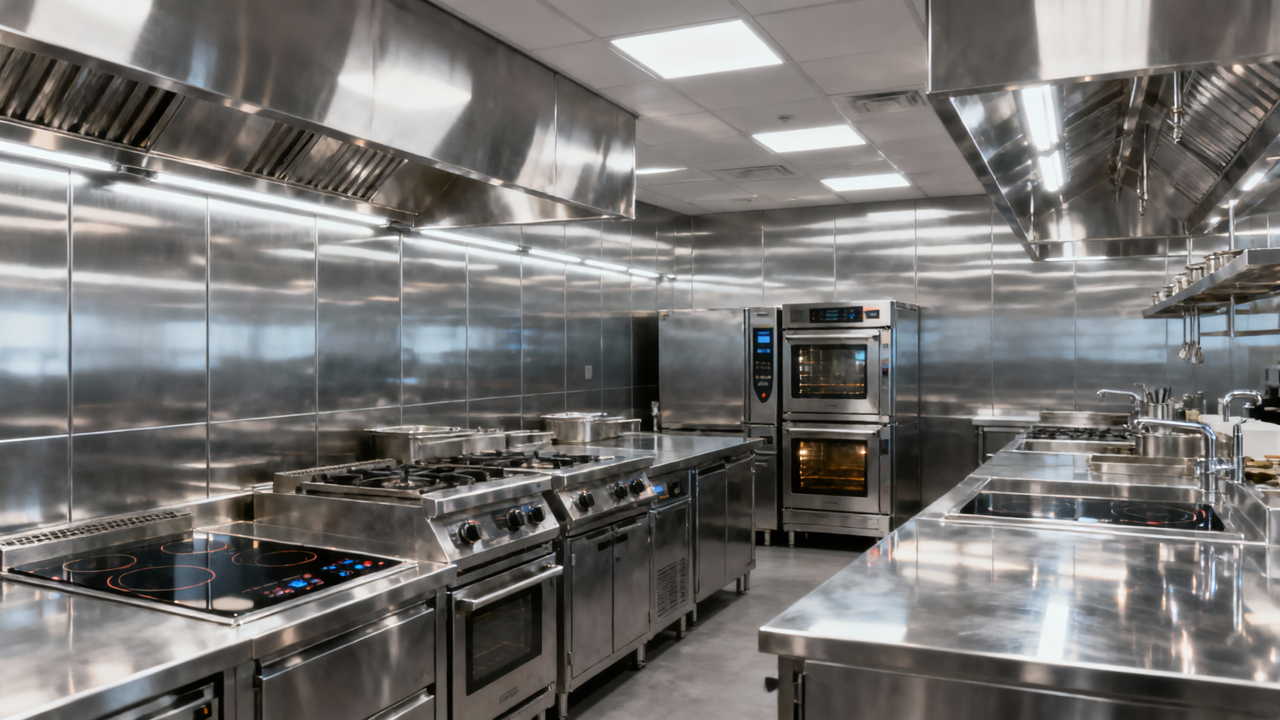
Commercial kitchen with stainless steel wall cladding

How to Specify for Kitchen Applications

Grade Selection: 201, 304, or 316?

Grade Nickel Content Best For Avoid
201 1–2% Dry storage walls, staff corridors, budget projects Steam tables, dishwashing areas, direct splash zones
304 8–10.5% General kitchen walls, prep areas, backsplashes, most commercial applications Coastal locations within 500m of saltwater
316 10–14% + 2–3% molybdenum Marine-adjacent kitchens, heavy chemical exposure, extreme heat zones Standard interior projects (unnecessary cost)

Practical recommendation: For 90% of commercial kitchen projects, 304-grade stainless steel decorative panels are the correct specification. They offer the optimal balance of corrosion resistance, formability (for custom corner trims and cutouts), and cost. Only upgrade to 316 if the kitchen is in a coastal environment or involves heavy chloride exposure (such as adjacent to industrial-scale seafood processing).

Thickness Guidelines

Application Recommended Thickness Rationale
Wall cladding / backsplashes 0.8mm – 1.0mm Sufficient rigidity for vertical installation; easy to cut for outlets and fixtures
High-impact zones (behind fryers, near doors) 1.2mm – 1.5mm Resists denting from equipment collision
Ceiling panels / soffits 0.6mm – 0.8mm Reduced weight for overhead installation
Countertop facing / integrated surfaces 1.5mm – 2.0mm Edge stability and impact resistance

Surface Finish Selection for Kitchens

  1. Brushed (Hairline) Finish — Most Recommended

    • Conceals minor scratches from daily use
    • Low reflectivity reduces glare under kitchen lighting
    • Accepts anti-fingerprint nano-coating for reduced maintenance
  2. Sandblasted / Matte Finish

    • Highest scratch concealment
    • Preferred in heavy-use prep areas where appearance consistency matters
    • Slightly higher surface friction can make wiping marginally slower
  3. Mirror Finish

    • Best for customer-visible open kitchen designs
    • Shows scratches readily — requires more maintenance in high-contact zones
    • Not recommended behind cooking equipment
  4. Anti-Fingerprint Coating (Add-On)

    • Nano-ceramic layer applied over brushed or mirror base
    • Repels oil and water; reduces visible smudging by 70–80%
    • Highly recommended for pass-through windows and front-of-house visible panels
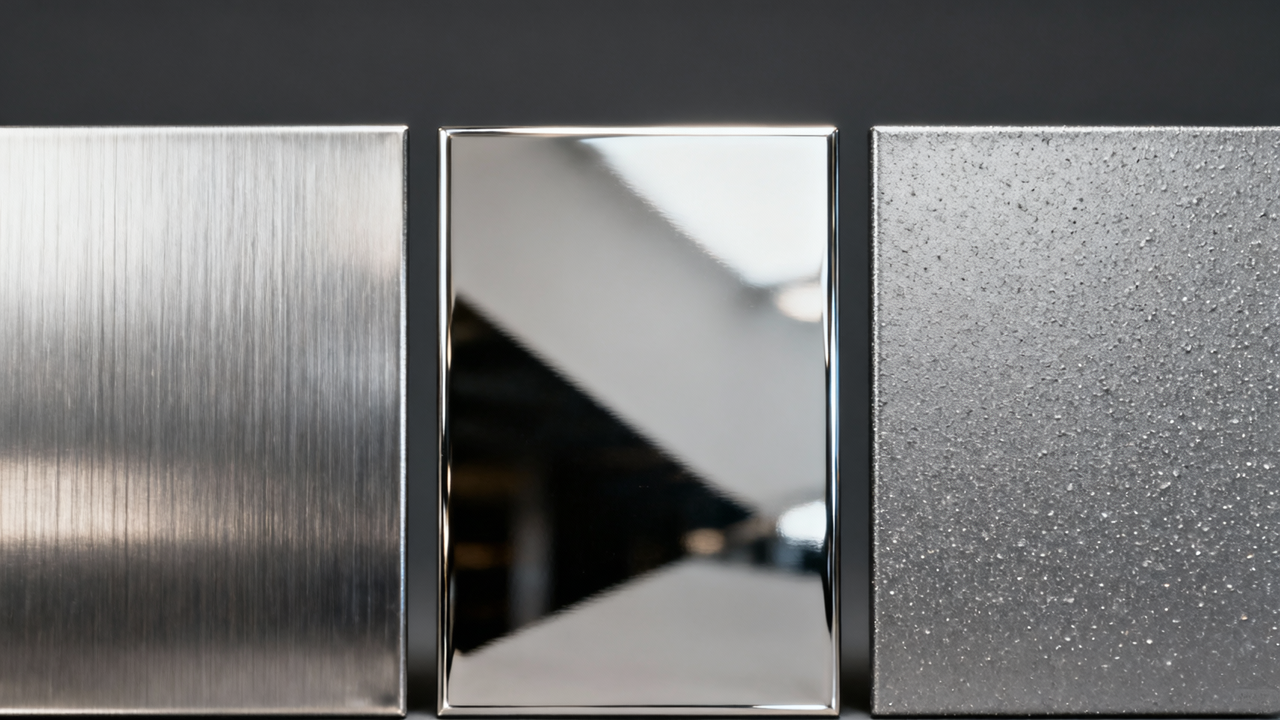
Stainless steel surface finish comparison: hairline, mirror, sandblasted

Installation Considerations

Panel Attachment Methods

Commercial kitchen stainless steel panels are typically installed using one of three methods:

  • Adhesive bonding (recommended for flat wall surfaces): Construction-grade structural adhesive with silicone perimeter seal. Cleanest appearance; no visible fasteners.
  • Z-clip mounting system: Aluminum or stainless steel Z-brackets allow panels to snap into place. Preferred for removable panels or areas requiring future access to utilities.
  • Screw-fixed with trim caps: Mechanical fastening through pre-drilled holes, concealed with matching color trim caps. Most secure for high-vibration areas near heavy equipment.

Critical Detail: Seam Treatment

Where panels meet (at corners, around windows, or at panel joints), specify continuous welded seams or food-grade silicone caulk matched to panel color. Open seams are health code violations in most jurisdictions because they trap organic material.

Integration with Utilities

Stainless steel panels can be precision-cut on-site or pre-fabricated with cutouts for:

  • Electrical outlets and switches
  • Plumbing penetrations
  • Ventilation grilles
  • Pass-through windows

For large projects, request CAD-based pre-fabrication from your supplier to minimize on-site cutting and ensure clean edges.

Cost Analysis: Stainless Steel vs. Alternatives

Cost Factor Stainless Steel (304, Brushed) FRP Panels Ceramic Tile
Material cost per m² $45–$75 $15–$25 $20–$40
Installation cost per m² $25–$40 $15–$25 $35–$55
Total initial cost per m² $70–$115 $30–$50 $55–$95
Expected lifespan 15–20 years 4–6 years 5–8 years
Annual maintenance cost Low (cleaning only) Moderate (re-caulking, panel replacement) High (grout repair, re-sealing, cracked tile replacement)
Cost per year of service $3.50–$7.70 $5.00–$12.50 $6.90–$19.00

The math is clear: despite higher upfront costs, stainless steel decorative panels deliver the lowest lifetime cost while providing superior hygiene, safety, and appearance.

Frequently Asked Questions

Q: Will stainless steel panels rust in a steam-heavy kitchen environment?

No — when 304 or 316-grade is specified. The chromium content (minimum 10.5%) forms a self-healing passive film that prevents rust. 201-grade may show minor surface discoloration in extreme humidity over very long periods but remains structurally sound. Avoid using 201 in direct steam exposure zones.

Q: Can stainless steel panels handle the thermal cycling near ovens and fryers?

Yes. Stainless steel has a thermal expansion coefficient of approximately 17.3 × 10⁻⁶ /°C — well within the tolerance of standard mounting systems. Proper installation includes allowance for expansion at panel edges (typically 2–3mm gap filled with flexible silicone). Panels will not warp, delaminate, or off-gas under thermal stress.

Q: Are PVD-colored panels food-safe?

PVD (Physical Vapor Deposition) coatings are inorganic ceramic films that are chemically inert and non-toxic. They meet food-contact safety standards. However, in direct food-contact zones, uncoated 304 or 316 bare stainless steel is still the conservative choice. Reserve colored PVD finishes for wall cladding, column wraps, and visible design elements rather than direct prep surfaces.

Q: How do I prevent scratching on brushed stainless steel kitchen panels?

Brushed finishes are designed to conceal minor scratches — the linear grain pattern masks surface abrasions that would be visible on mirror finishes. For severe impact zones, specify embossed or textured finishes (diamond plate, linen texture) which offer the highest scratch resistance. Anti-fingerprint coatings add a thin protective layer that also reduces surface marking.

Q: What is the lead time for custom-sized kitchen panels?

Standard sizes (1219mm × 2438mm, 1500mm × 3000mm) are typically available from stock. Custom-cut panels with fabricated openings require 5–10 days depending on complexity. Large projects with custom colors or textures should plan 2–3 weeks for production.

Final Verdict

If your project involves any of the following, stainless steel decorative panels are not just "good" — they are the correct specification:

  • Health department inspection requirements
  • High-visibility open kitchen design
  • 10+ year facility lifecycle planning
  • Heavy grease and steam exposure
  • Fire code compliance in cooking zones
  • Daily sanitization protocols

The only scenarios where stainless steel may be unnecessarily specified are low-budget temporary installations (food trucks with <3-year replacement cycles) or completely dry back-of-house storage rooms with no moisture, grease, or inspection exposure.

For restaurant groups, hotel F&B operations, hospital kitchens, and food manufacturing facilities, stainless steel decorative panels deliver the lowest total cost of ownership, the highest hygiene compliance, and the most professional appearance available in commercial wall materials today.

About Greateson Stainless Steel

Greateson Stainless Steel (Guangdong Shun Jiaxing Stainless Steel Co., Ltd.) is a leading manufacturer of decorative stainless steel panels for commercial and architectural applications. Founded in 2008 and headquartered in Foshan, China — the world's largest stainless steel production hub — we operate a 10,000㎡ factory with 11 specialized production lines including PVD vacuum coating, chemical etching, embossing, sandblasting, and anti-fingerprint coating.

We supply 201/304/316-grade stainless steel decorative panels in brushed, mirror, embossed, etched, PVD-colored, and anti-fingerprint finishes to clients across the Middle East, Europe, Southeast Asia, and the Americas. Our commercial kitchen panel systems are engineered for health-code compliance, fire safety, and long-term durability in the world's most demanding foodservice environments.

Contact us for kitchen project specifications, samples, or custom fabrication:

  • Email: sales@greateson.com
  • Website: greatesonsteel.com
  • Factory: Foshan, Guangdong, China | ISO 9001:2015 Certified

FAQ

Will stainless steel panels rust in a steam-heavy kitchen environment?

No — when 304 or 316-grade is specified. The chromium content (minimum 10.5%) forms a self-healing passive film that prevents rust. 201-grade may show minor surface discoloration in extreme humidity over very long periods but remains structurally sound. Avoid using 201 in direct steam exposure zones.

Can stainless steel panels handle the thermal cycling near ovens and fryers?

Yes. Stainless steel has a thermal expansion coefficient of approximately 17.3 × 10⁻⁶ /°C — well within the tolerance of standard mounting systems. Proper installation includes allowance for expansion at panel edges (typically 2–3mm gap filled with flexible silicone). Panels will not warp, delaminate, or off-gas under thermal stress.

Are PVD-colored panels food-safe?

PVD (Physical Vapor Deposition) coatings are inorganic ceramic films that are chemically inert and non-toxic. They meet food-contact safety standards. However, in direct food-contact zones, uncoated 304 or 316 bare stainless steel is still the conservative choice. Reserve colored PVD finishes for wall cladding, column wraps, and visible design elements rather than direct prep surfaces.

How do I prevent scratching on brushed stainless steel kitchen panels?

Brushed finishes are designed to conceal minor scratches — the linear grain pattern masks surface abrasions that would be visible on mirror finishes. For severe impact zones, specify embossed or textured finishes (diamond plate, linen texture) which offer the highest scratch resistance. Anti-fingerprint coatings add a thin protective layer that also reduces surface marking.

What is the lead time for custom-sized kitchen panels?

Standard sizes (1219mm × 2438mm, 1500mm × 3000mm) are typically available from stock. Custom-cut panels with fabricated openings require 5–10 days depending on complexity. Large projects with custom colors or textures should plan 2–3 weeks for production.
Project Next Step

Need drawing-based material selection and budget estimation? Share your project requirements and our team will propose a suitable stainless steel solution.