Blog

What Is a Stainless Steel Decorative Panel? A Complete Guide to Materials, Processes, and Applications

2026-04-17 · 12 min read

Stainless steel decorative panels are architectural metal materials made from 304, 316, or 201 austenitic stainless steel substrates, finished through PVD coating, mirror polishing, hairline brushing, embossing, etching, or heat transfer printing. This article provides a systematic guide to the history, corrosion resistance principles, grade selection, six major surface processes, thickness standards, and future trends.

stainless steel decorative panel304 stainless steel decorative sheet316 stainless steel201 stainless steelPVD coated stainless steelstainless steel etchingembossed stainless steelstainless steel heat transferantique finish stainless steelstainless steel panel thicknessstainless steel grade selectionarchitectural metal decoration

1. The Birth of Stainless Steel: How a 'Scrap' Discovery Changed the World

To understand stainless steel decorative panels, one must first understand stainless steel itself. Between 1912 and 1914, British metallurgist Harry Brearley was commissioned by the military to develop a wear-resistant gun-barrel alloy. After testing numerous chromium steel formulations with poor wear resistance, he discarded them all in a scrap pile. Months later, an assistant noticed one piece remained shiny and completely rust-free — an alloy containing more than 10.5% chromium. In 1916, stainless steel tableware was officially introduced, and this accidental discovery rewrote the history of human materials.

China's stainless steel industry began in 1952 when Taiyuan Iron & Steel produced the nation's first batch. Growth accelerated rapidly: in 2002, China's apparent stainless steel consumption surpassed that of the United States, and by 2006, production ranked first globally. Today, China is not only a manufacturing powerhouse but also a global innovation center for decorative processes such as PVD coating, antique finishing, and nano-coating.

2. Why Is Stainless Steel 'Stainless'? A Materials Science Perspective

The corrosion resistance of stainless steel comes from the precise interplay of its internal elements. Chromium (Cr) is the core protective mechanism: the chromium content must reach at least 10.5%. Chromium reacts with oxygen in the air to form a dense chromium oxide passive film only about 1–5 nanometers thick on the steel surface. This film is invisible to the naked eye yet effectively blocks oxygen and moisture intrusion. More importantly, even if the surface is scratched, the passive film can self-repair in an oxygen-containing environment, providing continuous protection.

The addition of nickel (Ni) not only enhances corrosion resistance but also gives the steel better toughness and cold-working performance (less prone to cracking during bending and stamping), which is crucial for the complex forming processes used in decorative panels. Molybdenum (Mo) is the savior of coastal architecture: 316 stainless steel contains approximately 2% additional molybdenum, which effectively resists chloride ion corrosion from sea breezes, making it the designated material for coastal buildings and swimming pool areas.

Important note: stainless steel is not 'absolutely stainless.' If strong chlorine-based bleach or strong acid cleaning agents are used, even 304-grade steel can develop rust spots. This is not a material quality issue but rather a chemical reaction that destroys the passive film.

3. 201, 304, or 316 — How Do You Choose?

This is the most common question faced by architectural buyers and interior designers. 201 stainless steel contains 3.5%–5.5% nickel, offers the lowest cost, and has moderate corrosion resistance, making it suitable for dry indoor spaces and budget projects. J1 has a higher copper content, enabling deep drawing for complex irregular parts. J2/J3 are the most widely used variants: J2 is harder and suitable for simple bending, while J3 contains slightly more nickel and offers more balanced performance. J5 is extremely hard but brittle, suitable for tubing but not for complex decorative parts.

In the architectural decoration field, 304 is the 'anchor stone.' It resists most daily acid and alkali corrosion, making it suitable for kitchens, bathrooms, interior walls, and outdoor signage and curtain walls under normal climatic conditions. When should you upgrade to 316? For projects within 500 meters of the coast, swimming pool areas, or industrially polluted environments, do not cut costs — use 316L directly.

Comparison table of 201, 304, and 316 stainless steel grades

4. Surface Processes Explained: PVD Coating — Fade-Resistant Metallic Film

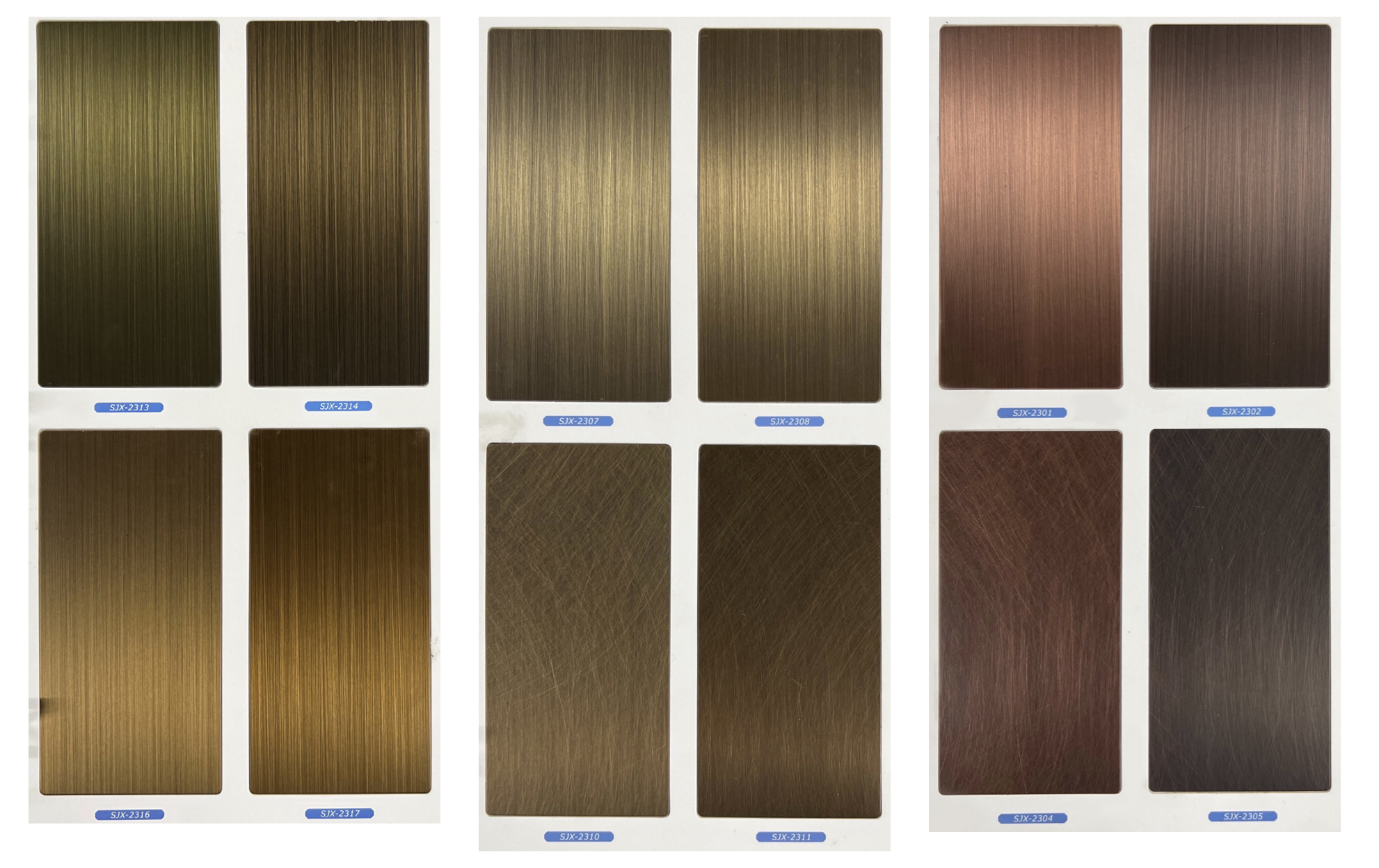
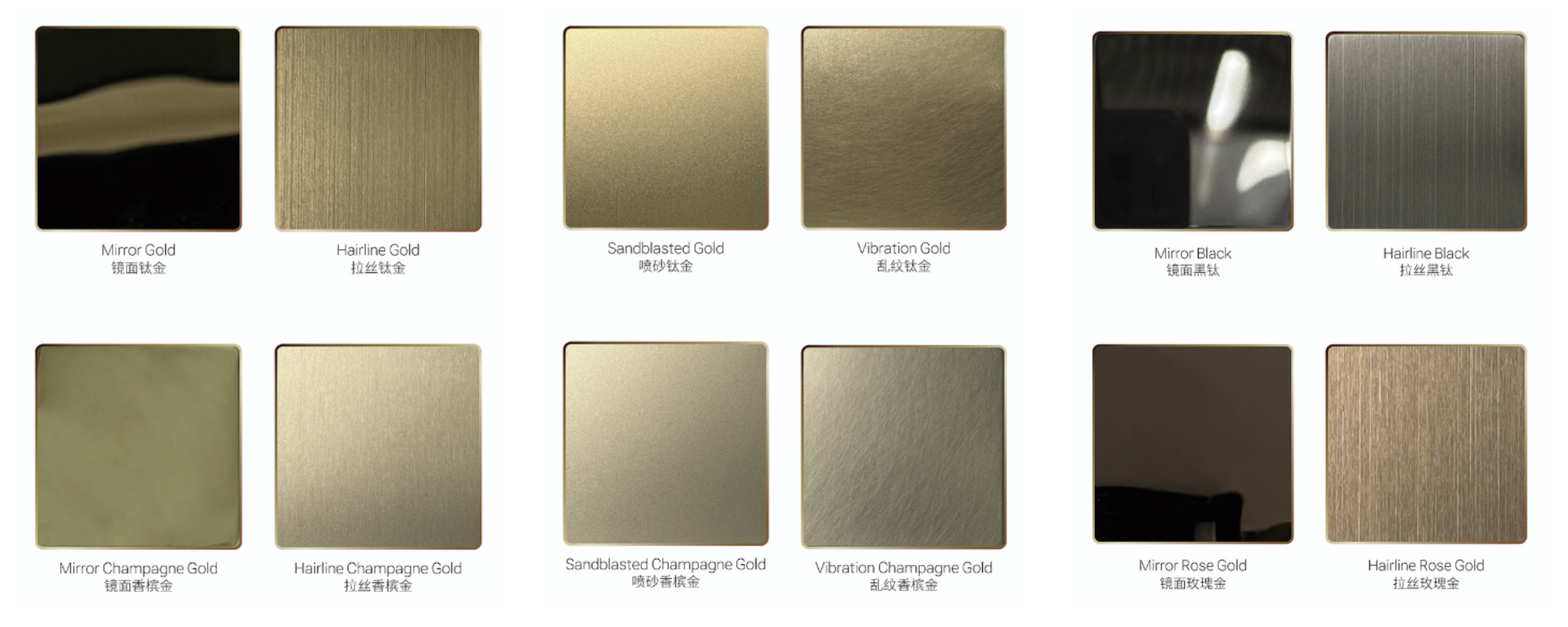
PVD (Physical Vapor Deposition) is currently the most widely used technology in architectural decoration. In a high-vacuum environment, metal ions are deposited onto the sheet surface using electric arcs, forming an inorganic ceramic coating 0.1–0.5 μm thick with a hardness of HV 1500–3000. Mainstream colors include black titanium (premium black), champagne gold (light luxury), rose gold (elegant), antique bronze (vintage), and gunmetal gray (industrial style).

Horizontal and vertical furnaces have distinct differences: horizontal furnaces produce stronger metallic textures and more vivid colors but at higher costs, with single-sheet lengths typically limited to 4 meters. Vertical furnaces can process giant sheets up to 10 meters long with higher efficiency, making them ideal for large-scale facade projects in landmark buildings. PVD coatings are UV-resistant, salt-spray resistant, and acid-alkali resistant, with far superior color stability compared to organic coatings, making them the preferred process for long-term outdoor applications.

PVD coated stainless steel color swatches

5. Nano Color Oil — Freedom of Color Expression

By spraying a colored nano-protective film onto the stainless steel surface, precise Pantone-standard color matching can be achieved, along with an anti-fingerprint effect. This process is especially suitable for luxury retail stores with strict brand-color requirements and custom projects needing a wide range of color options.

It is important to note that when bending thick sheets (over 1.2 mm), improper process control can cause a 'whitening' effect in the nano film layer. It is advisable to confirm the bending process plan with the factory in advance.

Nano color oil stainless steel color swatches

6. Antique Distressed Finish — Artistic Reproduction of Time

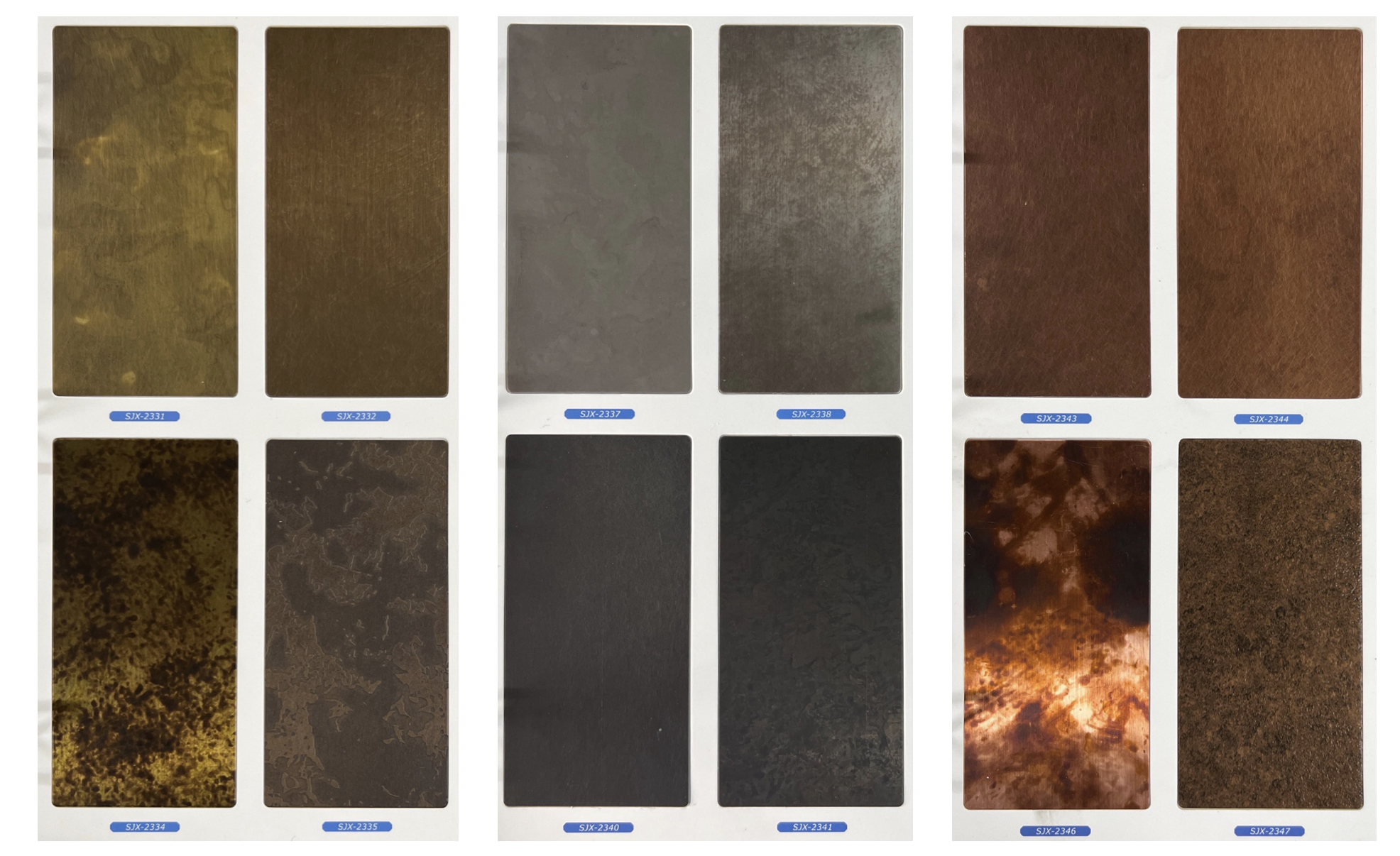
Through a water-based copper plating process, a layer of real copper is first applied to the surface, followed by manual rubbing and polishing to create a historical texture of antique bronze, bronze patina, or rusted metal. Scratching the surface reveals the real copper layer, which is heavier and more historically evocative than nano color oil finishes.

Due to the special nature of the manual distressing process, the texture of each sheet will inevitably differ. For large-area splicing construction, it is essential to place a single order for the entire required quantity in one batch to avoid color differences between batches.

Antique distressed stainless steel color swatches

7. Etching Process — 'Painting' on Metal

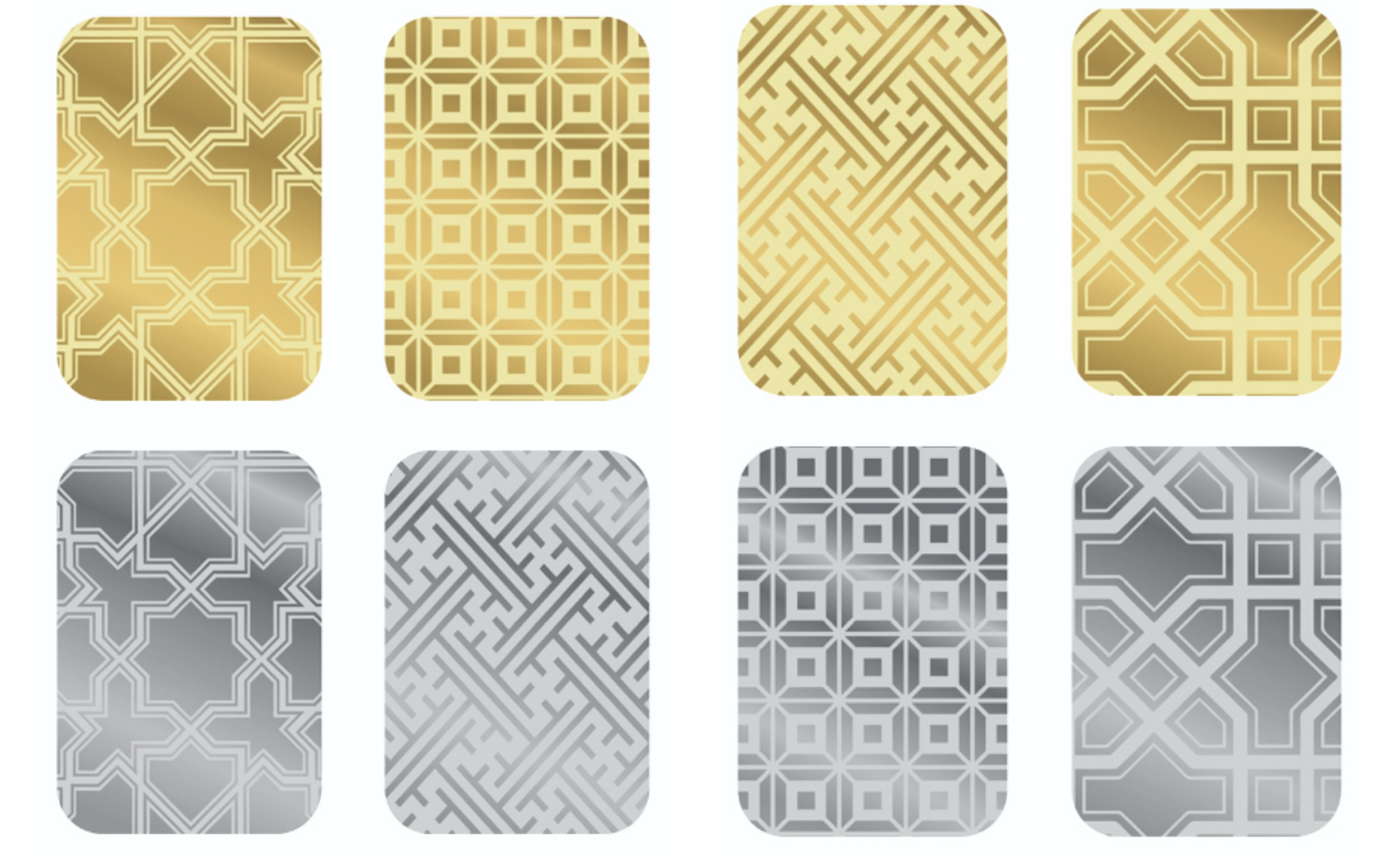
Chemical etching uses corrosive solutions to carve patterns into the metal surface, creating layered contrast effects between matte and glossy areas. Screen-printed etching is low-cost and fast, suitable for batch orders of 100 sheets or more. Photo-etching offers extremely high precision and can reproduce delicate, complex lines, making it ideal for high-end artistic customization. Material selection tip: for large-area etching, 304 is preferred. 201 material contains more impurities and is prone to black spots or water-mark defects after etching.

Stainless steel etched pattern samples

8. Embossing — Creator of Three-Dimensional Spatial Feel

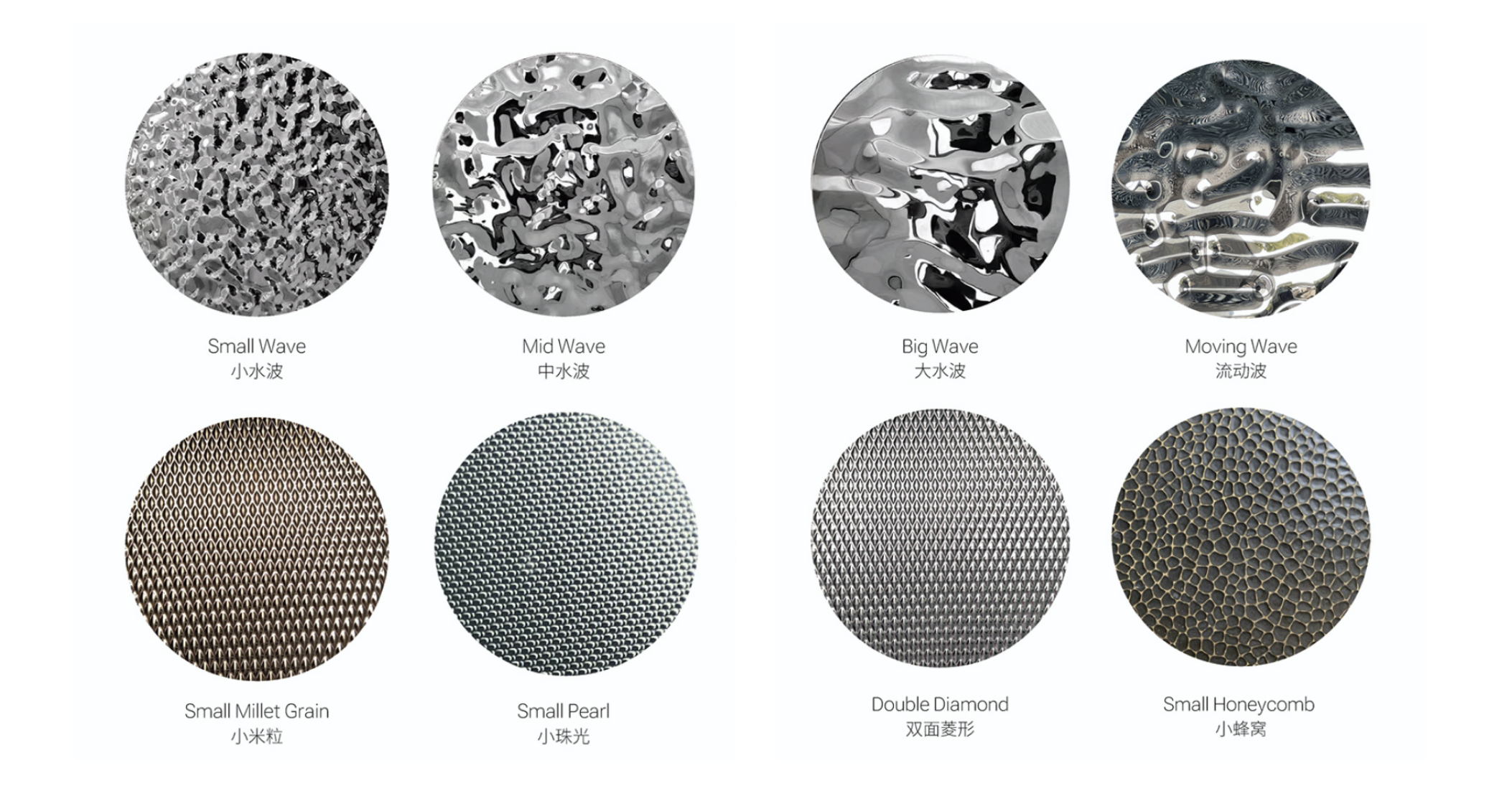
Embossing uses pressure dies to create relief patterns on the sheet surface. Water ripple is currently one of the most popular embossed patterns, and when combined with ceiling lighting, it can create dreamy, illusory light-and-shadow reflection effects. Thickness recommendation: for water-ripple ceiling installations, use sheets of 1.0 mm or thicker to avoid creases or undulations caused by uneven stress over large-area installations.

Stainless steel embossed texture samples including water ripple and grain patterns

9. Heat Transfer Printing — The 'Imitation Master' of Metals

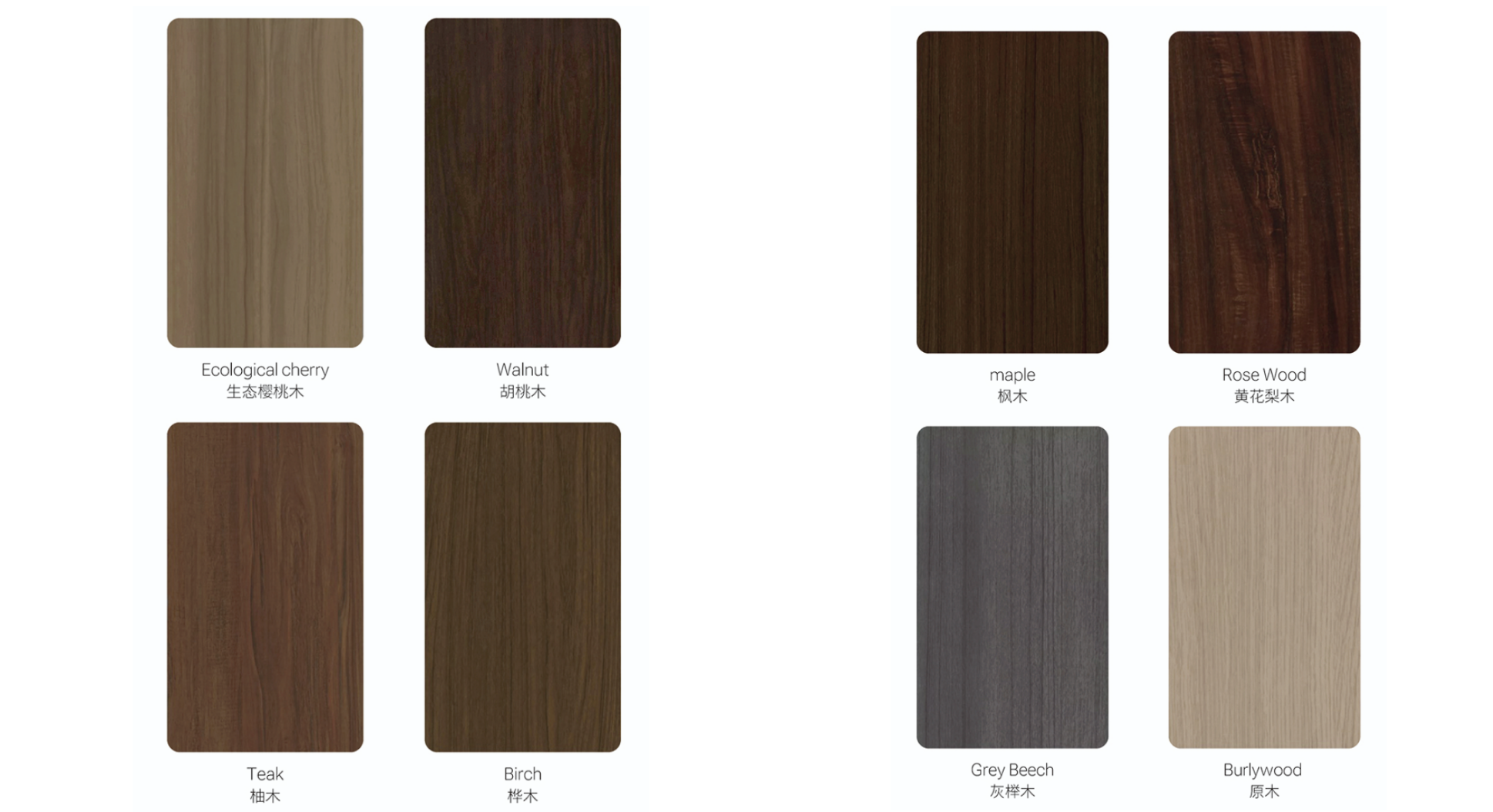
Heat transfer printing can accurately transfer wood grain and marble patterns onto stainless steel surfaces. With zero formaldehyde, fire resistance, and moisture resistance, it is an ideal solution for achieving a 'wood panel wall' effect in bathroom spaces.

Wood grain heat transfer stainless steel swatches

10. The Industry Gold Standard for Thickness Selection

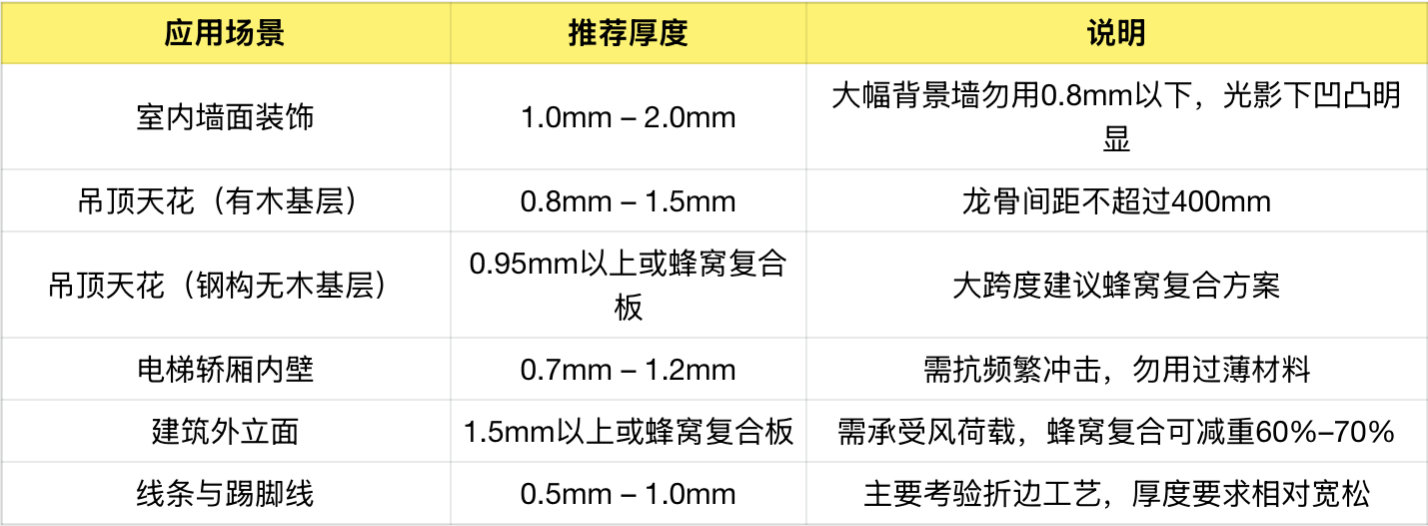
Contractors choosing thinner sheets to save costs often end up with a 'wave effect,' which is one of the most common reasons for rework in architectural decoration projects. Selecting the right thickness is crucial: interior wall decoration is recommended at 1.0–2.0 mm, and large background walls should avoid anything below 0.8 mm. For ceiling installations with wooden substructures, 0.8–1.5 mm is recommended with龙骨spacing not exceeding 400 mm. For steel-frame ceilings without wooden substructures, 0.95 mm or honeycomb composite panels are advised.

Elevator car interiors are recommended at 0.7–1.2 mm, requiring resistance to frequent impacts — do not use overly thin materials. Building facades should use 1.5 mm or honeycomb composite panels to withstand wind loads, with honeycomb composites reducing weight by 60%–70%. Trim and skirting lines are recommended at 0.5–1.0 mm, where the main challenge is the bending process, so thickness requirements are relatively relaxed.

Regarding oversized panels: when a single sheet exceeds 1.5 m × 3 m, stainless steel honeycomb composite panels are recommended. The stainless steel face retains visual texture, while the aluminum honeycomb core significantly reduces weight and effectively controls thermal expansion deformation, making it a mature solution for large-scale facades in landmark buildings.

Stainless steel decorative panel thickness selection reference table

11. Buying Tips and Cleaning Taboos

Color fading risks: water-plated black titanium carries a risk of color change after long-term outdoor exposure, especially when applied to 304 mirror-finish substrates. For outdoor projects, be sure to specify PVD electroplating rather than water plating. Edge cracking: nano color oils with excessive hardness (such as 8H) or coatings with excessive color-gold content may crack at the bend. Confirm bending process compatibility with the factory before placing an order.

Color difference management: stainless steel plating colors are affected by furnace temperature, humidity, and chemical concentration. Color deviation between different batches from the same furnace can reach 5%–10%. Before large-area installation, always place a single order for the full required quantity to avoid obvious color-mismatch issues from batch purchasing.

Cleaning taboos: never use steel wool (it scratches the surface and destroys the passive film). Avoid strong acid cleaners or chlorine-based bleach. Daily maintenance only requires wiping with a soft cloth dampened with clean water or a neutral detergent.

12. Future Trends in Stainless Steel Decorative Panels

Advances in materials science are driving stainless steel decorative panels to evolve comprehensively from 'good-looking' to 'highly functional.' Super anti-fingerprint technology is no longer limited to matte surfaces; high-gloss mirror finishes can also achieve touch-free cleanliness, greatly reducing maintenance frequency. Composite material systems (combining stainless steel with aluminum honeycomb or fire-retardant cores) simultaneously solve flatness, lightweighting, and installation efficiency issues, becoming the preferred choice for large-scale projects.

Antibacterial stainless steel introduces copper ions into the material formulation to achieve long-term surface bacteriostasis, offering broad prospects in medical spaces, high-end hotel dining areas, and public health facilities. Complex curved customization: with the widespread adoption of digital modeling and CNC machining, stainless steel can support complex double-curved forming, satisfying landmark buildings' pursuit of extreme non-linear shapes.

13. Summary

Stainless steel decorative panels have long evolved from industrial 'auxiliary materials' to 'protagonists' in architectural design. They are lighter than stone, more durable than wood, and more powerful in presence than glass. The key logic for material selection boils down to three points: choose the right grade (201/304/316), choose the right process (PVD/etching/embossing), and control thickness and substrate properly. Only when these three elements match can the full value of this material be realized. Greateson Steel is a premium stainless steel decorative solutions manufacturer focused on architecture and commercial spaces. Founded in 2008 in Foshan, Guangdong, China, it operates a 10,000 m² factory with over 80 professionals, offering full-range custom processing of 201/304/316 decorative panels covering PVD coating, hairline brushing, embossing, etching, heat transfer printing, and stainless steel honeycomb composite panels, serving high-end scenarios such as hotels, facades, elevators, and luxury retail, primarily exporting to the Middle East, Europe, and Southeast Asia.

FAQ

What is the difference between a stainless steel decorative panel and an ordinary stainless steel sheet?

Ordinary stainless steel sheets are primarily used for structural or industrial purposes with untreated surfaces. Stainless steel decorative panels add one or more surface finishing processes to the substrate, with visual aesthetics and decorative effect as the core design goals.

Which grade should be used indoors and outdoors?

For dry indoor environments, either 201 or 304 is suitable. For general outdoor scenarios, choose 304. For coastal, swimming pool, or industrial environments, choose 316L.

Can stainless steel decorative panels be customized with patterns and colors?

Yes. Any pattern can be customized through laser etching or chemical etching. PVD processes can accurately reproduce brand Pantone colors. Heat transfer printing can simulate natural material effects such as wood grain and stone texture.

For large-area facades, should solid panels or honeycomb composite panels be used?

For oversized panels (exceeding 1.5 m × 3 m) or facades sensitive to structural loads, stainless steel honeycomb composite panels are preferred. For small-to-medium interior decoration, solid panels are more economical and flexible.

Project Next Step

Need drawing-based material selection and budget estimation? Share your project requirements and our team will propose a suitable stainless steel solution.